
Rachel Ainsworth
Major: Physics
Project Title: Using Machine Learning to optimize a 3D magneto-optical trap laser polarization and intensity for trap performance
Committee: Simone Colombo, Physics; Daniel McCarron, Physics; Ambar Sengupta, Mathematics
Project Summary: Magneto-optical traps (MOTs) are a foundational tool in atomic, molecular, and optical physics with applications for high-precision atomic clocks, quantum information processing, and quantum gas studies. Their performance is sensitive to laser polarization entering the trapping region, particularly in unconventional polarization regimes. My project aims to systematically investigate and optimize the performance of an 85Rb MOT by controlling and automating laser polarization using computer-operated, motorized quarter waveplates and machine-learning-based optimization. The results will establish polarization-optimization protocols applicable to both conventional and unconventional MOT configurations, improving the robustness and versatility of ultracold atom experiments.
Rachel (Leilani) Ainsworth is a first generation, honors physics student from Richmond Hill, GA. She is a BOLD Women’s Leadership Scholar, co-leader for the Science, Technology, and Astronomy Recruits, and a member of Tri-Alpha honor society. After graduation, she plans to pursue a PhD and work in academia.
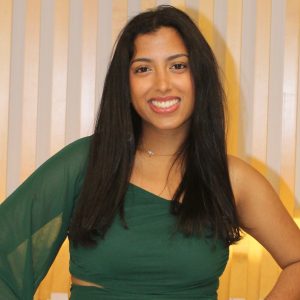
Riddhi Bansal
Majors: Molecular and Cell Biology; Individualized: Behavioral Neuroscience
Project Title: Generation and Evaluation of Synthetic Peptides to Disrupt TIGIT Interaction
Committee: Andrew Wiemer, Pharmacy; Dong Zhou, Nephrology; Stacey Hanlon, Molecular and Cell Biology
Project Summary: The interaction between PVR (poliovirus receptor) and TIGIT (T-cell immunoreceptor with Ig and ITIM domains) is known to play a role in the growth of tumors in the body. Specifically, this study will investigate the effects of PVR on CD8⁺ T cells, which are essential mediators of anti-tumor immune responses. The development of peptides to disrupt this interaction has a purpose of suppressing the growth of tumors. Peptide generation and characterization will be conducted using a combination of experimental techniques, including bacterial cloning and cell culture systems, followed by enzyme-linked immunosorbent assays (ELISAs) to evaluate inhibitory efficacy, among additional methods. By disrupting the PVR–TIGIT interaction, this work seeks to promote enhanced CD8⁺ T-cell activity and ultimately reduce tumor growth.
Riddhi Bansal is an honors student majoring in Molecular and Cell Biology and Behavioral Neuroscience. She is also a part of the Special Program in Medicine and the STEM Scholars program and intends to pursue an MD in the future. Outside of research, she is involved in many clubs and enjoys baking, painting, and traveling.
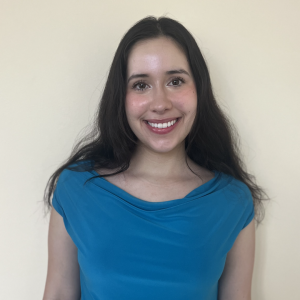
Anna Coulter
Major: Molecular and Cell Biology
Project Title: Synthesis of Photoswitchable NF 110 Analogs: Investigating P2X3 Receptors in Oral Pain
Committee: : Michael Kienzler, Chemistry; John Redden, Physiology and Neurobiology; Christopher Malinoski, Molecular and Cell Biology
Project Summary: Photoswitches are chemical compounds that reversibly change conformation (inactive to active and vice versa) in response to different wavelengths of light. I plan on modifying the existing P2X3 receptor antagonist NF 110 into a family of photoswitchable probes. These compounds will provide reversible spatiotemporal control over P2X3 receptors and serve as molecular tools for researchers studying the relationship between P2X3 receptors and oral pain. More broadly, these molecules could form the basis for photoswitchable modes of dental anesthetics, in which pain can be turned on and off with different wavelengths of light.
Anna Coulter is a junior majoring in Molecular and Cell Biology from Fairfield, Connecticut. Outside the lab, she volunteers with Project HOPE, performs with the UConn Chamber Singers, and enjoys playing badminton. After graduation, she plans to attend dental school.
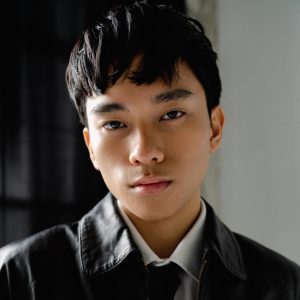
Alec Benjamin Dacuma
Majors: Political Science and Human Rights
Project Title: An Analysis of the US Based Experiences of Filipina Migrants Described as Bagong Bayani or Modern Hero, by the Philippines' government.
Committee:Bandana Purkayastha, Sociology; Fred Lee, Political Science; Shareen Herel, Human Rights and Political Science
Project Summary: Recent migration in the Philippines has led to a phenomenon in which Filipina migrants have been described as the "Bagong Bayani," or Modern Heroes, by the government, for uplifting the national economy. This ascription has framed the economic remittances they send to the Philippines as reflections of their experiences. As migrant laborers, Filipinas navigate their host country while reinterpreting their roles as mothers and family members amid separation. This study will focus on Filipina migrants’ experiences in the US to challenge the remittance-dominant discourse on migration by collecting stories that represent experiences far beyond the "Bagong Bayani" narrative.
Alec is a junior honors in Political Science and Human Rights. He is an aspiring international lawyer who hopes to someday open law firms on migrant security in the Philippines and the US. You can also find Alec at the Writing Center as a tutor and Peer Facilitator for UConn’s leadership certification series workshops.
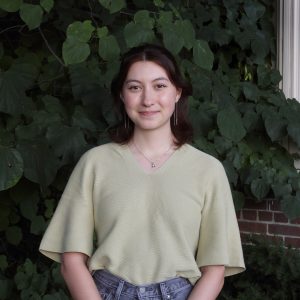
Rebecca Denhart
Majors: Molecular and Cell Biology, Ecology & Evolutionary Biology
Project Title: Characterizing the Accumulation and Succession of Microorganisms on Bird Feeders
Committee: Sarah Hird, Molecular and Cell Biology; Chris Elphick, Ecology and Evolutionary Biology; Dan Bolnick, Ecology and Evolutionary Biology
Project Summary: Generalized supplemental feeding of wild birds by humans occurs on an enormous scale in the Western world and has both positive and negative impacts on wild bird populations. This project will address the conflicting ecological effects of supplemental feeding and how disease transmission, facilitated by bird feeders, may be involved. Experimentally, this project will test how bird activity affects the accumulation and succession of microorganisms, particularly avian pathogens, on uncleaned bird feeders over time. The overarching goal of this project is to consider whether there is an optimal feeding strategy that minimizes adverse ecological and health impacts on wild birds.
Rebecca Denhart is an honors student double-majoring in Molecular & Cell Biology and Ecology & Evolutionary Biology, pursuing a career in dental medicine. On campus, she helps lead the Birding Club and Project Smile Global, and assists with conservation biology research. Outside of school, she enjoys outdoor recreation and reading.

Mary Katherine Eddy
Major: Physiology and Neurobiology
Project Title: Unwrapping the Mystery of Corneal Myelination
Committee: Royce Mohan, Neuroscience; Susan Preston-Berlin, Biology; Rahul Kanadia, Physiology and Neurobiology
Project Summary: The cornea must remain perfectly transparent for clear vision, a property maintained by the absence of myelin, yet recent research suggests that following injury, nonmyelinating corneal Schwann cells can aberrantly adopt a myelinating phenotype, potentially compromising corneal clarity and sensory recovery. By identifying molecular and cellular signals driving this shift, my project seeks to uncover key transcriptional regulators that could serve as therapeutic targets to preserve corneal transparency and sensation after trauma/surgery. This work is vital to protecting patients who experience sensory loss following procedures like LASIK, as impaired corneal sensation can lead to potentially irreversible damage.
Mary Katherine Eddy is a Presidential Scholar and IDEA grant recipient from Watertown, CT studying Physiology and Neurobiology in the honors program. She is enrolled in UConn Army ROTC and after serving as an officer in the Army, she plans to attend medical school.
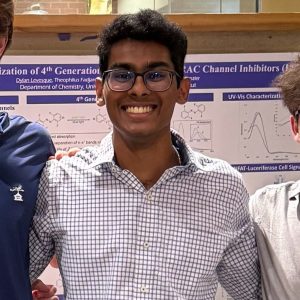
Chevintha Edirisinghe
Major: Physiology and Neurobiology
Project Title: Investigating novel protein regulators of lymphatic endothelial cell junction morphology
Committee: Georgia Zarkada, Physiology and Neurobiology; Randall Walikonis, Physiology and Neurobiology; Anastasios Tzingounis, Physiology and Neurobiology
Project Summary: Junctional proteins in lymphatic endothelial cells (LECs) are regulated to control lymphatic vessel permeability. Junctions connecting LECs undergo a transformation from discontinuous, button-like junctions to continuous zipper-like junctions in response to environmental signals, such as growth factors like VEGF-A; however, the mechanism for this transformation is not fully understood. Our lab has recently identified a candidate protein group modulating this remodeling. Utilizing techniques such as biotinylation, siRNA knockdown, and pharmacological inhibition, this project aims to uncover the necessity for his protein group in junction remodeling and point to potential therapeutic targets for lymphatic disorders.
Chevintha Edirisinghe is an honors Physiology and Neurobiology student from Orange, CT. He was a 2025 UConn PNB REU student and plans to become a physician-scientist. Outside of research, Chevy enjoys playing the piano, being a team leader for Kids & UConn Bridging Education, and assisting with pediatric physical therapy interventions in the REINVENT-PT lab.

Ashly Gasior
Majors: Chemistry, Physics
Project Title: Probing spin-correlated radical pair evolution in donor -chiral bridge- acceptor molecules using photo-CIDNP
Committee: Dr. Tomoyasu Mani, Chemistry; Dr. Lea Ferreira dos Santos, Physics; Dr. Jing Zhao, Chemistry
Project Summary: The delocalization of spin-correlated radical pairs (SCRPs) generated by donor-chiral bridge- acceptor (D-X-A) molecules is driven primarily by hyperfine interactions. Traditionally, hyperfine coupling constants (HFCCs) are determined through electron paramagnetic resonance, but it is tricky to assign constants to specific nuclei since electronic spins are detected, not nuclear. Photo-chemically induced nuclear polarization (photo-CIDNP) is a phenomenon observed in SCRPs that is detectable using nuclear magnetic resonance (NMR) spectroscopy, and the level of polarization is proportional to HFCCs. Therefore, using photo-CIDNP I can map HFCCs onto particular nuclei within D-X-A molecules. This will allow for more targeted molecular engineering, and the structural control of these molecules enables programmable nuclear spin polarization for applications in NMR sensitivity enhancement and spin-based sensing.
Ashly Gasior is an honors chemistry and physics student from Seekonk, MA, who aspires to develop new methodology in magnetic resonance spectroscopies and spin-based sensing. She is highly involved in the chemistry department, and in her free time enjoys crochet and thrifting.
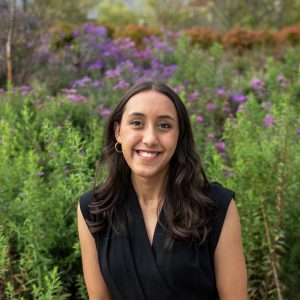
Shailaja Gillett
Major: Molecular and Cell Biology
Project Title: Parafibromin/β-Catenin Interaction as a Potential Mechanism for CDC73 Tumor Suppressive Functions
Committee: Jessica Costa, Center for Molecular Oncology, UCHC; Jelena Erceg, Molecular and Cell Biology; Christopher Malinoski, Molecular and Cell Biology
Project Summary: Parathyroid carcinoma is often associated with loss of function mutations of the tumor suppressor gene CDC73. CDC73 encodes the protein parafibromin however due to the lack of a normal parathyroid cell line parafibromin’s role in parathyroid cells has not been determined. Through the development of primary parathyroid cultures and analysis of protein-protein interactions my project aims to evaluate the parathyroid specific role of parafibromin and how its loss can lead to tumor formation. The findings of this project will provide the basis for identification of therapeutic targets and new treatments.
Shailaja Gillett is an honors student majoring in Molecular and Cell Biology with a minor in Physiology and Neurobiology. She is also the VP of Sanskriti, UConn’s Indian classical arts organization. After graduation, she plans to pursue a Ph.D. in Cancer Biology and continue doing academic research.
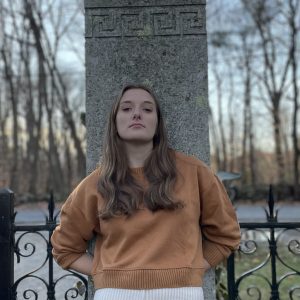
Elly Hume
Majors: Individualized: Maritime Archaeology & Classical Studies; History
Project Title: Trade, Production, and Cultural Transmission: Maritime Perspectives on Material Culture in Antiquity
Committee: Kevin Feeney, History; Tammo Reichgelt, Earth Science; Kroum Batchvarov, Maritime Archaeology; Matt McKenzie, Maritime History
Project Summary: Material culture is a key aspect of archaeological study, which can inform vital discussion around aspects of civilizations and their relationship with maritime practices. Cultural diffusion, maritime modes of production, and relationships of exchange have been extensively researched, all in distinct capacities. While both historians and archaeologists aim to extrapolate practical answers for theoretical research, they often neglect to cross-examine findings in varying contexts. Utilizing the science and methodology of archaeological discoveries alongside practical nautical experience and the narrative frameworks of the historical approach will demonstrate the relevance of maritime perspectives in ancient societies.
Elly Hume is an Honors and Babbidge Scholar majoring in both Maritime Archaeology & Classical Studies and History with a minor in Global Studies. On campus, Elly is the President of Climate & Mind Network, a TME Mentor, an active brother of the service fraternity Alpha Phi Omega, involved in an Earth Science laboratory, and frequently travels abroad for both research and recreation.
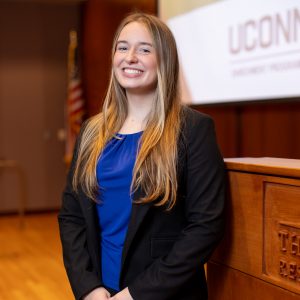
Olivia Joyce
Majors: Political Science, Statistics, and Human Rights
Project Title: Reframing Gender-Based Violence and Intimate Partner Violence: Building a Dataset and Model Law to Advance Human Rights Frameworks in the United States
Committee: David Richards, Political Science and Human Rights; Virginia Hettinger, Political Science; Mary Lai Salvaña, Statistics
Project Summary: US state laws often fail to fully address torture committed by non-state actors, including gender based and intimate partner violence, despite international human rights standards that prohibit such practices. Legal frameworks primarily focus on state actors; many forms of private and domestic violence are not treated as human rights violations or addressed fully under the law. Building upon a pilot study done as a Caxide Scholar, this research will create an original dataset documenting how all fifty states and Puerto Rico define and regulate non-state torture in their statutes and constitutions. By identifying gaps in protection and evaluating existing laws, the project aims to develop model legislation to strengthen accountability and improve protections for victims of non-state violence across the US.
Olivia Joyce is an honors Political Science, Statistics, and Human Rights student from Oceanside, New York. On campus, she is a Peer Research Ambassador, Model United Nations Director, and Academic Chair for Alpha Lambda Delta Honor Society. After graduation, she plans to pursue a PhD or JD program.
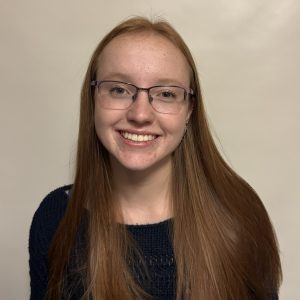
Jaclyn Kolor
Major: Molecular and Cell Biology
Project Title: From Mutation to Medicine: Understanding and Targeting Oncogenic Zinc Finger Variants
Committee: Andrei Alexandrescu, Molecular and Cell Biology; Spencer Nyholm, Molecular and Cell Biology; Carolyn Teschke, Molecular and Cell Biology
Project Summary: Mutations in zinc finger proteins can drive cancer, yet their structural and functional consequences remain poorly understood. This project investigates the H391Y variant of ZNF208, a melanoma-associated mutation where a zinc-coordinating histidine is lost. Preliminary NMR data reveals that while the mutant remains folded, it gains structural flexibility and potential hydrolytic activity, suggesting a gain-of-function where a DNA-binding protein becomes a DNA-cleaving enzyme. Using NMR spectroscopy, circular dichroism, and activity assays, we will characterize this structural shift. These insights will guide the development of a PROTAC-based strategy to selectively degrade the oncogenic mutant, offering a novel therapeutic approach for mutation-driven cancers.
Jaclyn Kolor is an honors student from Poughkeepsie, NY, majoring in molecular and cell biology. She is a Babbidge Scholar and a mentor in Pre-Medical Society. After graduation she plans to attend medical school.
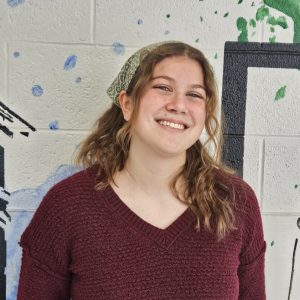
Danielle Kress
Majors: Environmental Sciences, Chemistry
Project Title: Characterizing Variation of Per and Polyfluoroalkyl Substances Transfer from Aquatic to Terrestrial Food Webs
Committee: Jess Brandt, Christian Brueckner, Jason Vokoun
Project Summary: Per and Polyfluoroalkyl substances, or PFAS, are persistent organic pollutants characterized by strong carbon-fluorine bonds that repel interactions with other molecules. Though PFAS have been shown to bioaccumulate in food webs, the understanding of which PFAS compounds will transfer most efficiently through diet and why it varies among sites is still uncertain. This project investigates compound-specific transfer patterns from aquatic to terrestrial systems by examining emergent aquatic insects and their predators, riparian spiders. This project will support the understanding of PFAS fate and transport in the environment, applying to monitoring of PFAS contamination and risks of food web-mediated PFAS exposure to other terrestrial organisms.
Danielle Kress is an honors dual-degree student majoring in Environmental Sciences and Chemistry. On campus, she is involved in the leadership team for Honors Across State Borders, a service organization that spends spring break volunteering with Habitat for Humanity. She also plays trumpet in the UConn Marching Band and Pep Band.
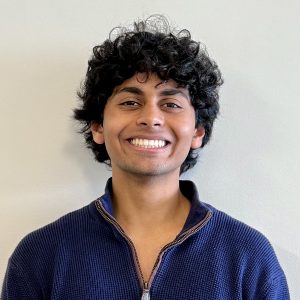
Ryan Krishna
Major: Individualized: Neuroscience of Language; English
Project title: Automating CIU-Based Discourse Analysis for Aphasia
Committee: Dr. Jennifer Mozeiko; Dr. Penelope Pelizzon; Dr. Emily Myers
Project Summary: Ryan Krishna’s University Scholar Project develops a clinician-friendly tool to automate discourse analysis in aphasia. Measures such as Correct Information Units (CIUs) quantify how informative and efficient connected speech is, but current workflows remain manual and time-intensive. Using Python and Natural Language Processing methods, his project will implement validated CIU scoring rules adapted for conversation, detect aphasia-specific phenomena (e.g., paraphasias, neologisms, false starts), and output an annotated transcript plus a variety of distinct summary metrics. Performance will be validated against high-reliability human coding, tested on external datasets, then packaged in a simple interface for clinical use.
Ryan Krishna is a junior honors dual-degree student. Ryan serves as Co-Editor-in-Chief of The Long River Review, and he works and volunteers in an aphasia lab. After Graduation, Ryan hopes to pursue a career in medicine, combining his passion for language and patient care to make a meaningful impact.
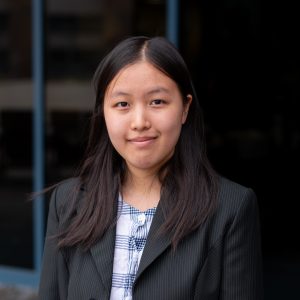
Lucy Liu
Majors: Statistics, Applied Mathematics
Project Title: Improving Clustering of Biomedical Data with Quantum Cognition Machine Learning
Committee: Haim Bar, Statistics; Ming-Hui Chen, Statistics; Thomas Roby, Mathematics
Project Summary: This project proposes to use Quantum Cognition Machine Learning (QCML) as a robust estimator of intrinsic dimensionality to improve clustering of medical data such as gene expression and disease groups. By leveraging QCML’s ability to detect the true underlying data dimension even in the presence of noise, I aim to select optimal dimensionality parameters for reduction methods such as t-SNE, which requires the user to input dimension number. I will benchmark QCML-informed dimensionality selection against conventional approaches on large-scale datasets and evaluate improvements in clustering quality. Ultimately, this research seeks to establish QCML as a practical tool for guiding dimensionality reduction in biomedical data analysis.
Lucy Liu is a junior honors student and STEM scholar majoring in Statistics and Applied Mathematics. She is a 2024 Holster Scholar. On campus, she is the president of the Joint Statistical Club and the co-founder of Science Olympiad at UConn. After graduation, she plans to pursue a Ph.D. in Statistics.

Carter Morton
Majors: Political Science, History
Project Title: Kennan: On the Perils of American Society
Committee: Frank Costigliola, History; Jeffrey Ladewig, Political Science; William Theiss, History; Sara Silverstein, History
Project Summary: In an increasingly multipolar geopolitical environment, America finds itself at a national security crossroads, torn between the prioritization of the international or domestic arena. My project will emphasize the significance of internal cohesion in tandem with external strength through the analysis of the writings of George Frost Kennan, a top US diplomat and public intellectual in the twentieth century. In my research, I will parcel through Kennan’s menagerie of domestic policy prescriptions and cultural philosophies with the hope of uncovering a profound insight into contemporary American society.
Carter Morton is an honors student pursuing a bachelor’s degree in political science and history. Professionally, he has interned with the Senate and the Department of Defense, and plans to pursue a career in international trade with the Department of the Treasury or Commerce.
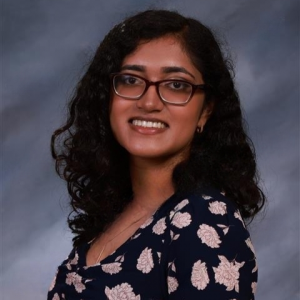
Aanchal Poddar
Majors: Physics, CSE
Project Title: Tracing Black Hole Mergers and Host Galaxy Star Formation in the FIRE-3 Suite
Committee: Daniel Anglés-Alcázar, Physics; Sheida Nabavi, CSE; Luchang Jin, Physics
Project Summary: Discoveries of black hole mergers have pushed the limits on our understanding on how black holes (and their corresponding host galaxies) form and evolve, motivating detailed computational studies of merger-driven processes. In this project, I identify merger events in the new Feedback In Realistic Environments (FIRE-3) cosmological simulations; comparing trends in physical parameters, such as mass growth and accretion rate, and identifying correlations with local star formation rates. By analyzing multiple simulated galaxies, this work aims to clarify behavior around black hole mergers and define their impact on the co-evolution of black holes and host galaxies.
Aanchal Poddar is a junior honors student majoring in Applied Physics and CSE who plans to pursue a Ph.D. in computational astrophysics. In her spare time, she enjoys hiking and horror movies.
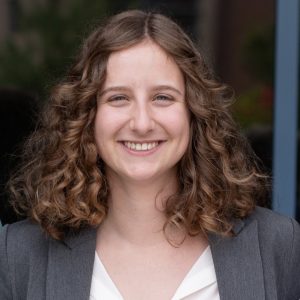
Mackenzie Robillard
Major: Molecular and Cell Biology
Project Title: Investigating the Relationship Between LINE1 Transcription and Neocentromere Stability
Committee: Rachel O'Neill, Molecular and Cell Biology; Stefan Pinter, Genetics and Genome Sciences, UCHC; Barbara Mellone, Molecular and Cell Biology
Project Summary: When a centromere, a tightly regulated structure required for proper chromosome segregation, is compromised, another location on the chromosome can take on centromere function. This location is referred to as a "neocentromere", and its formation prevents the loss of vital genetic information. Both centromeres and neocentromeres are flanked by regions of transposable elements, most notably LINE1s, which replicate through an RNA intermediate. My project seeks to explore the epigenetic mechanisms of neocentromere stability by investigating the role of LINE1 elements as boundaries to active native and neocentromeres in an RNA-dependent manner through genome editing.
Mackenzie Robillard is an Honors Molecular and Cell Biology major with a minor in Agriculture and Health Biotechnology. Outside of research, she plays the saxophone in the UConn Marching and Pep Bands and is president of the UConn Genome Ambassador Program. After graduation, Mackenzie intends to pursue a Ph.D. in genetics.
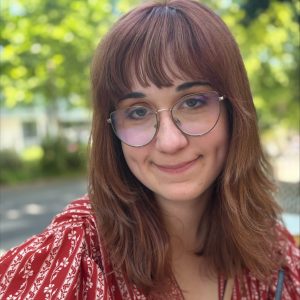
Hannah van Rijnswou
Majors: Psychological Sciences; Individualized: Criminology
Project Title: Comparative Neuroanatomical Analysis of Shank3B and TS2-Neo Mouse Models of Autism Spectrum Disorder
Committee: Rosyln Fitch, Psychology; Inge-Marie Eigsti, Psychology; Etan Markus, Psychology; Harry van der Hulst, Linguistics
Project Summary: A variety of genetically altered mouse models (including Shank3B and TS2-Neo) have been used to model autistic phenotypes in mice. Despite similar behavioral results, the mechanisms are different. Shank3B is a synaptic scaffolding protein that plays a key role in synaptic development and plasticity, while TS2-Neo regulates the function of voltage-gated L-type Ca2+ channels. Comparative neuroanalysis will be conducted on the volume and neuronal density of the medial prefrontal cortex, mediodorsal thalamic nucleus, and key amygdaloid nuclei in these models. By comparing genetically distinct models with similar phenotypes, this study examines whether the similar phenotypes reflect shared or divergent neuroanatomy.
Hannah van Rijnswou is an Honors student and former Holster Scholar. Outside of research, she serves as the National Communications Coordinator for UConn RHA, VP of the Undergraduate Linguistics Society, and President of Costume Club. After graduation, she plans to pursue a Ph.D. in Clinical Psychology.
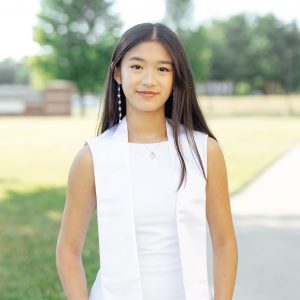
Shen Wan
Major: Individualized – Applied Neuroscience & Technology
Project Title: Characterizing Beta Oscillatory Responses to Rhythmic Auditory Stimulation for Novel Neuromodulation Therapies
Committee: Heather Read, Psychological Sciences; Sabato Santaniello, Biomedical Engineering; Yi Zhang, Biomedical Engineering
Project Summary: Parkinson’s Disease (PD) is a progressive neurological disorder affecting millions worldwide and is marked by motor impairments like tremors and bradykinesia. Many studies suggest that these symptoms are closely linked to disruptions in beta-band brain oscillations in motor-related regions. While rhythmic auditory stimulation has been shown to improve movement in PD patients, the neural mechanisms underlying these effects remain relatively unexplored. I am interested in investigating how rhythmic sound can modulate neural activity underlying motor control. This project uses EEG to examine how rhythmic versus arrhythmic auditory stimuli influence beta oscillations in motor-related brain regions, particularly the supplementary motor area. Identifying how the brain syncs to rhythm will help build the foundation for developing noninvasive, wearable auditory therapies to improve motor control in Parkinson’s Disease.
Shen Wan is an honors student from North Haven CT, majoring in Applied Neuroscience & Technology. On campus, she is Vice President of Minorities in Medicine, External Events Chair for Society of Asian Scientists and Engineers, Social Media Chair for Alzheimer’s Awareness, and is involved in the UConn Symphony Orchestra. You will always find her with a camera in hand, whether it be for documenting tournaments with UConn Pickleball Club or her photography/film account. In the future, she plans to apply to MD/PhD programs and hopefully become a pediatric neurosurgeon.
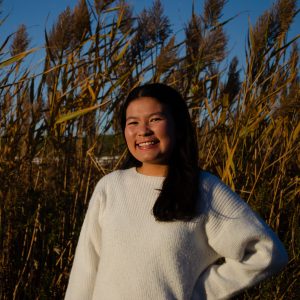
Alana Wolfson
Major: Animal Science
Project Title: The Impact of Poor Maternal Nutrition on Mitochondrial Regulatory Factors in Sheep Offspring
Committee: Sarah Reed, Animal Science; Steven Zinn, Animal Science; Chaoyu Zhai, Animal Science; David Daggett, Molecular and Cell Biology
Project Summary: Poor diets during sheep gestation impact the growth and development of their offspring. Previous works correlated over-fed and restricted-fed diets with negatively impacted metabolic function and muscle physiology. The purpose of this project is to further evaluate the impact of poor maternal nutrition on regulatory factors of offspring skeletal mitochondria. This includes apoptotic factors, metabolic co-factors, and gene expression. The future implications of this project correspond to evaluating the extent of poor maternal nutrition on offspring cellular function. Maternal nutrition studies apply to both animal welfare and physiological research.
Alana Wolfson is an honors student majoring in Animal Science (pre-veterinary concentration), minoring in Cellular and Molecular Biology. She is a UConn IDEA Grant recipient and an American Physiological Society undergraduate fellow. Alana plans on attending veterinary school and pursuing clinical research. In her free time, she enjoys wildlife rehabbing.